New closure trial
Assess how a bottle and cap combination behaves before a larger production commitment.
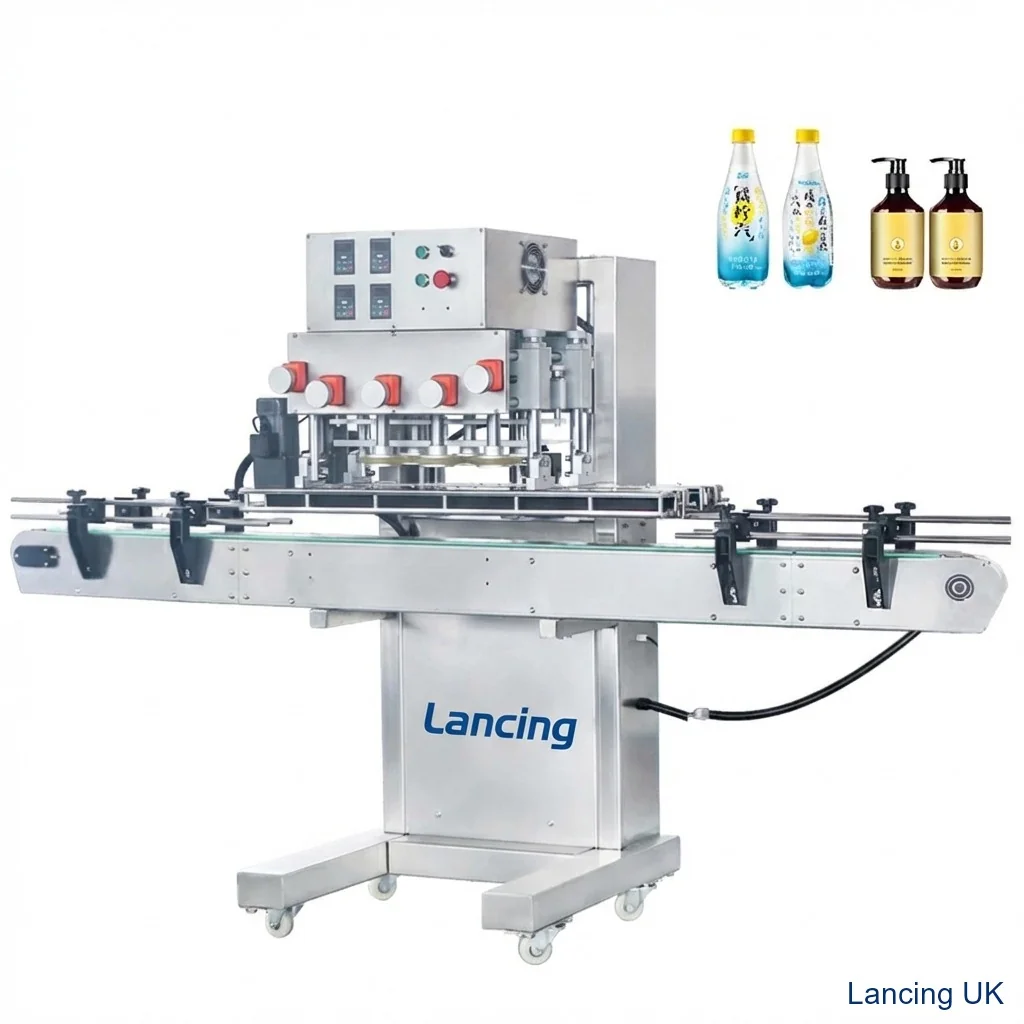
UK machinery rental
Plan temporary capping around the cap type, container geometry, required torque, feeding method, line speed and site layout.
Check capping machine availabilityDirect answer
Yes—suitable capping equipment can be assessed for trials, contract runs, seasonal demand and temporary production. A cap that appears simple can still behave differently depending on thread, liner, tamper evidence, container rigidity, torque and how it is presented to the machine.
Compatibility first: representative bottles and closures are normally needed. No capper is confirmed from photographs or nominal cap diameter alone.
Closure control
The capper must apply the closure consistently without damaging the closure, distorting the container or creating an unstable downstream pack.
Temporary production
Assess how a bottle and cap combination behaves before a larger production commitment.
Add closure application for a defined order, seasonal run or contract-packing project.
Support a temporary pump, trigger or cap format that the normal line cannot handle.
Review temporary equipment when an existing capping stage is unavailable or being maintained.
Frequently asked
Potential applications include compatible screw caps, pumps, triggers and selected closures. The cap, bottle, torque, handling and feeding requirement must be assessed together.
Automatic or inline capping may be considered where the line rate, container stability, cap presentation, footprint and interfaces suit available equipment.
Not always. Lower-volume projects may use operator-placed closures, while higher-output applications may need compatible sorting and feeding. The labour and output target decide the practical route.
Yes, where working heights, speeds, transfers, controls, guarding, utilities and product accumulation can be planned as one temporary line.
Related rental routes
Closure application usually sits between filling and labelling. A complete review prevents a fast capper becoming part of an unbalanced line.
Explore packaging line hireMatch product dosing and container presentation to the capping stage.
Keep capped containers stable and correctly oriented for labelling.
Scope short-term production, peaks and breakdown-cover requirements.
Start with the closure
Include samples, torque needs, production rate, site and dates.